In today’s borderless economy, a compelling value proposition is more than a marketing statement — it’s a strategic business development asset. It determines how your offering stands out in crowded markets, how prospects perceive value, and whether you become their first choice — or an afterthought.
At the Business Development Association (BDA), we view the value proposition as a cornerstone of strategic leadership, competitive positioning, and customer-centric growth. In this article, we explore how BD professionals can craft and refine their value propositions to thrive in a globally competitive market.
What Is a Value Proposition?
A value proposition is a clear, concise declaration of how your product, service, or solution solves a problem, delivers benefits, and differentiates from competitors.
A strong value proposition addresses three core questions:
Who is your target audience?
What specific problem do you solve or benefit do you create?
How to Differentiate in Global Competitive Environments
Region
Key Differentiators
MENA
Trust, government relations, and local adaptation
EU
Compliance, sustainability, data protection
North America
Speed, innovation, proven ROI
Asia-Pacific
Scalability, pricing flexibility, ecosystem fit
Tip: Always include regional proof points (e.g., “Used by 3 of the top 5 banks in the UAE”)
B2B Value Proposition in Action – Sample Template
For Whom: Mid-size logistics companies in the EU We Solve: Route inefficiency, fuel cost volatility Our Proof: AI-powered optimization that cuts delivery time by 18% Unlike Others: We integrate directly with legacy ERP systems in 3 weeks
A cloud services provider repositioned its offering in Southeast Asia from “affordable hosting” to “localized, regulation-compliant cloud infrastructure with multilingual support.”
Result: 42% increase in enterprise leads in 6 months.
Final Thoughts: Value Is Perception — So Design It Strategically
In globally competitive markets, perceived value = real value. BD professionals must engineer positioning around what truly matters to the customer, in their market, language, and business reality.
Business development has evolved significantly over the past decade.
Traditional approaches centred primarily on networking, relationship-building, and transactional growth are no longer sufficient within increasingly complex and AI-enabled business environments.
Modern business development professionals are now expected to contribute to:
strategic growth planning
ecosystem development
partnership governance
market intelligence
innovation strategy
stakeholder alignment
organisational transformation
At the same time, organisations face accelerating challenges related to:
AI disruption
digital competition
customer expectations
global market volatility
ecosystem-based competition
As a result, business development is becoming increasingly structured, competency-driven, and strategically integrated across organisations.
The following practices reflect some of the most important strategic business development capabilities shaping modern growth environments in 2026, aligned with the BDA Body of Competency & Knowledge (BDA BoCK®) framework.
1. Align Business Development with Organisational Strategy
Business development initiatives should never operate independently from organisational objectives.
High-performing organisations increasingly align business development activity with:
strategic growth priorities
market positioning
innovation objectives
ecosystem expansion
long-term capability development
This alignment improves:
resource allocation
partnership quality
growth sustainability
organisational coordination
Within the BDA BoCK®, Strategic Leadership plays a central role in ensuring growth initiatives support broader organisational direction.
2. Use Market Intelligence Proactively
Many organisations still use data reactively rather than strategically.
Modern business development increasingly depends on:
market intelligence
competitor monitoring
customer insight
ecosystem analysis
behavioural trends
Business development professionals should continuously evaluate:
emerging market shifts
competitive disruption
industry transformation
customer expectations
rather than relying solely on historical performance data.
Competencies such as Market & Competitive Analysis are becoming increasingly important in AI-enabled business environments.
3. Develop a Consultative Mindset
Business development is increasingly relationship-driven rather than transaction-driven.
Modern stakeholders expect:
strategic understanding
consultative engagement
long-term value creation
collaborative problem-solving
Professionals who focus solely on selling often struggle to sustain long-term strategic relationships.
The Consultative Mindset competency within the BDA BoCK® emphasises the importance of:
listening capability
stakeholder understanding
strategic dialogue
value alignment
in modern business development practice.
4. Understand the Full Stakeholder Journey
Business development extends beyond initial engagement.
High-performing organisations increasingly evaluate the entire stakeholder lifecycle, including:
early engagement
onboarding
relationship development
partnership sustainability
long-term retention
This broader perspective improves:
customer experience
stakeholder trust
partnership continuity
ecosystem value creation
Business development professionals increasingly contribute to long-term relationship strategy rather than isolated opportunity generation alone.
5. Use CRM Systems Strategically
CRM systems are no longer simple contact databases.
Modern organisations increasingly use CRM platforms to support:
pipeline intelligence
opportunity prioritisation
behavioural analysis
forecasting
strategic relationship management
Platforms such as Salesforce and HubSpot now integrate:
AI-driven insights
predictive analysis
workflow automation
engagement monitoring
However, CRM effectiveness depends heavily on strategic interpretation rather than technology alone.
6. Build Strategic Networks — Not Just Contacts
Networking has evolved significantly in recent years.
Modern business development increasingly depends on:
ecosystem positioning
stakeholder influence
strategic alliances
long-term relationship capital
Rather than building large contact lists, professionals should focus on:
relationship quality
strategic alignment
ecosystem relevance
influence mapping
High-value business development networks typically include:
decision-makers
strategic partners
industry influencers
institutional stakeholders
7. Develop Structured Go-To-Market Strategies
Go-To-Market (GTM) planning has become increasingly important within modern growth environments.
Successful GTM strategies align:
positioning
customer targeting
partnerships
pricing models
distribution channels
operational readiness
Organisations increasingly rely on structured GTM frameworks rather than fragmented launch activity.
Competencies such as Growth & Expansion Strategies support professionals in developing scalable and strategically aligned market-entry approaches.
8. Position Strategic Value Before Pricing
Modern business development increasingly depends on value communication rather than price competition alone.
Stakeholders increasingly evaluate:
long-term ROI
strategic outcomes
operational efficiency
partnership capability
innovation value
Organisations that compete primarily through discounting often weaken long-term positioning and sustainability.
Value-based business development requires:
strong communication capability
market understanding
strategic positioning
consultative engagement
9. Analyse Failed Opportunities Systematically
Lost opportunities can provide valuable strategic insight when evaluated correctly.
certifications support competency development aligned with the BDA BoCK® framework and modern business development practice.
Both certifications assess the same competencies and weighting structure, with differences focused primarily on strategic complexity and assessment depth.
The Future of Business Development in 2026 and Beyond
Business development is increasingly becoming:
competency-driven
AI-enabled
ecosystem-oriented
governance-focused
strategically integrated
Future business development professionals will likely require stronger capability in:
strategic leadership
partnership governance
AI-assisted decision-making
innovation strategy
stakeholder ecosystems
growth analytics
As organisations continue adapting to rapidly evolving market conditions, business development capability will remain one of the most important drivers of sustainable growth and strategic resilience.
Conclusion
Modern business development requires significantly more than traditional networking or sales activity.
Professionals today must combine:
strategic thinking
market intelligence
stakeholder capability
innovation readiness
governance awareness
relationship management
within increasingly complex and AI-enabled business environments.
The practices outlined above reflect the growing evolution of business development into a structured strategic discipline supported by competency frameworks such as the BDA BoCK®.
Organisations and professionals capable of adopting these practices effectively will likely be better positioned to achieve sustainable growth, stronger partnerships, and long-term competitive relevance in 2026 and beyond.
In today’s hyper-competitive landscape, selecting the right business development tools can be the difference between market leadership and missed opportunity. As organizations scale, enter new markets, and pursue strategic partnerships, tools that support agility, insight, and execution become indispensable.
At the Business Development Association (BDA), our BDA BoCK® framework emphasizes practical tools that turn knowledge into measurable results. In this article, we explore the top 10 business development tools that professionals across the globe should master in 2026.
1. HubSpot or Salesforce (CRM Tools)
Whether you’re managing leads or tracking long-term partnerships, a robust CRM system is non-negotiable. Tools like HubSpot and Salesforce allow BD professionals to:
OKRs (Objectives & Key Results) and KPIs are essential for tracking performance and aligning BD efforts with business goals. Whether through Excel dashboards or tools like Weekdone:
Business Development Training is no longer a luxury—it’s a strategic imperative. In a world shaped by rapid globalization, digital transformation, and sectoral disruption, organizations are under pressure to identify new markets, build resilient partnerships, and deliver sustained growth. These challenges cannot be solved by instinct alone. They require structured thinking, multidisciplinary skills, and strategic foresight. That’s where Business Development Training comes in.
Yet, most professionals enter the field of business development without any formal training. They learn through trial and error—often mislabeling BD as glorified sales or limited to corporate networking. This lack of structure creates gaps in strategic execution, misalignment across teams, and missed opportunities.
Structured training fills these gaps by:
Building a common language across BD teams
Equipping professionals with analytical and strategic tools
Aligning activities with institutional goals
Improving the ROI of business development initiatives
At its core, Business Development Training is about creating scalable, repeatable systems for growth not just quick wins.
External Reference:
McKinsey & Co. notes that organizations with structured business development systems outperform their peers in growth velocity and partner retention. Read more
2. Core Skills Covered in Business Development Training
A comprehensive Business Development Training program must go beyond networking and deal-making. It must equip professionals with a cross-functional skill set that spans strategy, market intelligence, communication, negotiation, innovation, and institutional transformation.
Here’s a breakdown of the key skills typically covered in a top-tier training curriculum—mapped to strategic outcomes:
A. Strategic Thinking and Opportunity Design
Business development starts with understanding the landscape. Participants must learn how to:
Analyze macroeconomic trends and sector-specific shifts
Identify whitespace opportunities and market gaps
Design scalable BD models aligned with institutional strengths
Set long-term strategic priorities that guide tactical execution
This skill forms the foundation of proactive BD—not reactive sales chasing.
B. Market and Ecosystem Intelligence
A high-performing BD professional must be part analyst, part strategist. Training includes:
Competitor analysis and benchmarking tools
Market sizing and segmentation frameworks
Ecosystem mapping: identifying value chains, enablers, and disruptors
Policy and regulatory foresight: especially critical in MENA and Africa
With these tools, BD becomes a market-sensing function—not just an outreach activity.
C. Stakeholder and Partnership Development
Training modules in this area focus on:
Building strategic alliances (cross-sector, cross-border)
Partnership lifecycle management (from scouting to renewal)
Trust-based negotiation and consensus-building
Influence and persuasion in complex environments
This area turns BD teams into institutional bridge builders—able to shape ecosystems.
D. Communication and Value Positioning
You can’t build partnerships if your messaging is fragmented. Training includes:
Consultative communication frameworks
Executive pitch structuring
Value articulation and ROI demonstration
Storytelling for innovation and transformation
This ensures the BD team can speak the language of opportunity and influence.
E. Innovation and Co-Creation Tools
Leading training programs include modules on:
Business model innovation
Customer co-creation and validation
Scenario planning and adaptive design
Growth hacking strategies for BD pilots
These skills are essential for disruptive BD models, especially in emerging markets.
F. Governance, Compliance & Institutional Impact
Often overlooked, but essential:
Ethical frameworks for BD
Compliance with procurement and regulatory standards
BD reporting and impact measurement
Strategic alignment with national or ESG agendas
This makes BD not just fast but credible, sustainable, and aligned with governance.
Mapped Example: BDA BoCK
These skill areas directly reflect the BDA BoCK, the global framework defining 14 core competencies across behavioral and knowledge domains. Explore the BDA BoCK here
3. Training Delivery Formats & Which Is Best for You
In the world of Business Development Training, the delivery method plays a critical role in the effectiveness and applicability of learning. It’s not just about what is taught—but how it’s taught, and whether the format aligns with your goals, learning style, and professional context.
Here’s a breakdown of the major formats with their pros, limitations, and ideal use cases:
A. In-Person Bootcamps & Workshops
Overview: These are intensive, instructor-led experiences held over 2–5 days, often focused on case studies, simulations, and high-engagement activities.
Ideal For:
Executives or BD teams from the same institution
Immediate application of tools in a guided setting
Building peer-to-peer networks across industries
Strengths:
Live feedback and coaching
Customized use cases
Stronger team-building dynamics
Limitations:
Costly to organize/attend (especially cross-border)
Limited scalability
No flexibility for different learning speeds
B. Self-Paced Online Programs
Overview: Delivered via LMS platforms, these programs allow learners to progress through video modules, quizzes, and simulations at their own pace.
Integration of microlearning, flashcards, and analytics
Limitations:
Requires high self-discipline
Limited real-time interaction
C. Blended Learning Programs
Overview: Combines online modules with scheduled live coaching or discussion forums.
Ideal For:
Organizations that want scalability and interaction
Certification pathways that require preparation plus mentoring
Strengths:
Flexibility meets human support
Balance between structure and freedom
Limitations:
Requires good scheduling and platform coordination
Slightly longer learning journey
D. Cohort-Based Training (Live Virtual)
Overview: Delivered via Zoom or Teams, these follow a set calendar with group interaction, case work, and live facilitation.
Ideal For:
BD teams across departments or regions
High-engagement learners
Peer exchange and applied strategy
Strengths:
Real-time feedback
Group case challenges
Instructor accountability
Limitations:
Must commit to schedule
Performance varies by facilitator quality
E. On-Demand Certification Tracks
Overview: Purpose-built for learners seeking formal certification—these are structured with assessments, progression tracking, and a final exam (like BDA-CP or BDA-SCP).
Institutional support (are you learning alone or as part of a team?)
Preferred interaction level (solo vs collaborative)
In most cases, a blended or cohort-based format delivers the best balance of flexibility and accountability.
4. How to Choose the Right Business Development Training Program
When it comes to investing in business development training, one size never fits all. Therefore, selecting the right program requires more than just browsing a course catalog—it demands strategic alignment between your career goals, your organization’s maturity, and the evolving market needs.
Here’s a step-by-step approach to making the right decision:
Step 1: Define Your Training Objective
First and foremost, ask yourself: What do I want to achieve? Are you aiming to:
Build a core skillset in deal structuring, strategic alliances, or BD planning?
Lead BD teams with more structured frameworks?
Once your “why” is clear, it will help filter out irrelevant programs.
Step 2: Assess Your Experience Level
Next, evaluate where you are in your BD journey:
Early Career: Seek foundational programs focused on frameworks, communication, and opportunity mapping.
Mid-Career: Look for tools, templates, and simulation-based programs to drive strategy execution.
Executive-Level: Prioritize leadership, governance, and policy-level BD thinking.
Tip: The BDA BoCK can help you map competencies across all levels.
Step 3: Evaluate Learning Format & Duration
Moreover, time and flexibility matter. Choose between:
Short-term workshops for targeted upskilling
Full certifications for career transformation
Blended or cohort-based learning for strategic projects
Always consider what format matches your schedule and engagement preferences.
Step 4: Validate Trainer Credentials and Curriculum Relevance
Equally important, look into who is delivering the program and whether the curriculum is:
Aligned with global BD competencies
Industry-specific or sector-agnostic
Practical, not just theoretical
Credibility comes from both content and context—make sure the provider understands your market challenges.
Step 5: Check for Post-Training Support
Finally, what happens after the training?
The best BD training programs provide:
Ongoing access to learning materials
Peer forums or alumni groups
CPD pathways or certification renewal options
This long-term view ensures that the value of training doesn’t fade after the final module.
In Summary
Choosing a business development training program is a strategic move. By clarifying your goals, aligning with your experience, and selecting the right format and provider, you ensure your investment pays off in actual results not just a certificate on the wall.
5. Business Development Certifications vs Training Courses
While both training courses and certifications fall under the umbrella of professional development, their purpose, structure, and outcomes are vastly different. Understanding these differences is essential when crafting a long-term business development career path.
Business Development Training Courses: Skill-Specific & Tactical
To begin with, training programs are typically:
Short-term and highly focused
Designed to address specific challenges or skills
Ideal for upskilling in areas such as negotiation, proposal writing, or BD automation tools
Often conducted in workshops, online modules, or in-house formats
For example, a program on “Strategic Account Planning” or “Digital BD Tools” may offer hands-on practice and immediate applicability.
Training is best suited for:
Professionals who want rapid impact
Teams that need to align on tools and methods
Organizations solving a specific performance gap
Business Development Certifications: Comprehensive & Credential-Based
In contrast, certifications such as the BDA-CP or BDA-SCP are:
Credentialed, with proctored exams and verification
Mapped to a standardized competency framework (e.g., BDA BoCK)
Globally recognized across industries and regions
Designed for structured, long-term professional positioning
They are ideal for:
Individuals pursuing career acceleration
Professionals shifting into strategic or leadership roles
Organizations building institutional BD capability
Certification isn’t just about learning it’s about signaling verified strategic readiness to the market.
Which One Do You Need?
Ultimately, the choice between training and certification depends on:
Your Goal
Go for Training if…
Go for Certification if…
Quick Skill Boost
You need fast, focused outcomes
You’re aiming for recognized validation
Team Alignment
You’re aligning internal methods
You’re building strategic authority
Long-Term Growth
You want to build foundations
You want to lead at national or global levels
Transitioning Between Both
Many professionals begin with tactical training and later pursue certifications. For example:
The journey is stackable and each layer reinforces the next.
6. Certification Pathways After Training
For professionals who have completed one or more business development training programs, the natural next step is often formal certification. This progression transforms practical exposure into recognised, validated expertise especially critical in competitive or regulated industries.
Why Transition from Training to Certification?
Training programs provide situational skills, while certifications provide strategic positioning. Here’s why many BD professionals and organizations make the shift:
Credential Recognition: A certification such as BDA-CP signals a commitment to standardized global competencies.
Career Acceleration: Many employers treat certifications as a prerequisite for leadership or consulting roles.
Competitive Edge: Certifications help distinguish talent in saturated markets, especially when tied to frameworks like the BDA BoCK.
According to Harvard Business Review, certifications are one of the top indicators of long-term executive readiness (source).
The Stackable Development Model
BDA encourages a “stackable” development model:
Training Programs: Build foundational and applied skills
Specialized Credentials: Tailored certifications in areas like innovation partnerships, opportunity design, or public sector BD
BDA-CP or BDA-SCP: Formal certification covering 15 global competencies
Continuous CPD: Ongoing professional development tracked via the BDA Registry
This model helps professionals build authority progressively and ensures that every skill learned is integrated into a wider strategic framework.
Institutional Pathways for Teams
Organizations can also integrate training and certification in structured pathways:
Upskill + Certify: Run internal training and move high performers to certification.
Embed Standards: Use certification as part of talent development, performance reviews, and BD governance.
7. Business Development Training for Organisations
While individuals often seek business development training to boost their personal careers, organizations stand to gain exponentially by investing in structured BD upskilling at scale. In today’s competitive landscape—marked by disrupted markets, shifting policy frameworks, and cross-sector competition—equipping entire teams with a shared strategic language in BD can be a game changer.
Why Organisations Should Invest in BD Training
Organizations that embed BD training within their talent development frameworks benefit from:
Strategic Alignment: Training ensures teams across departments understand the same growth logic, from sales and strategy to partnerships and innovation.
Pipeline Activation: Skilled BD teams are more effective in converting networks, ideas, and market signals into monetizable opportunities.
Governance & Compliance: Training based on global standards such as the BDA BoCK brings process discipline to BD functions that are often informal or fragmented.
Talent Retention: Offering BD training improves employee engagement and signals long-term investment in their careers.
Training Formats for Institutional Upskilling
Here’s how organizations typically structure business development training:
In-House Bootcamps: Customized training delivered to internal teams by certified instructors.
Microlearning Modules: Online, self-paced content for distributed teams and just-in-time needs.
Strategic Workshops: Executive-level strategy sessions focused on opportunity design, innovation pipelines, and institutional partnerships.
Each format should be tied to key BD competencies like stakeholder management, growth modeling, and consultative communication—ensuring real transfer of capability.
Measuring ROI of BD Training
To track the impact of training on performance, organizations can use key Business Development KPIs, such as:
The field of business development training is rapidly evolving—driven by technological advancement, globalization of markets, and the changing nature of partnerships. Organizations and professionals alike must stay ahead by understanding how training formats, content, and delivery are being reshaped for the modern economy.
Here are some of the most significant trends shaping BD training today:
1. AI-Integrated Learning Paths
Modern business development training increasingly incorporates AI-powered tools to personalise learning journeys:
Adaptive Assessments: Diagnostic tools tailor learning content based on performance and knowledge gaps.
Scenario Simulations: AI generates real-world partnership or negotiation simulations to build decision-making skills.
Chat-based Mentors: Learners engage with AI mentors that reinforce BD concepts through contextual conversation.
2. Competency-Based Certification Frameworks
Traditional course completion certificates are being replaced by competency-based credentials—grounded in practical, demonstrated skills rather than time spent. The BDA BoCK is a strong example of a modern framework used to assess 15 globally benchmarked BD competencies.
This shift ensures that certifications reflect actual capability in:
Value proposition design
Ecosystem mapping
Cross-sector opportunity analysis
Governance alignment
3. On-Demand Microlearning
With workforces becoming increasingly decentralized, microlearning is rising in popularity:
Short, focused lessons (5–10 minutes) that tackle specific BD skills
Mobile-optimized content for on-the-go professionals
Embedded quizzes and real-time feedback for higher retention
Platforms like Coursera and LinkedIn Learning offer such BD modules—though few are mapped to formal standards like the BDA BoCK.
4. Industry-Specific Customization
BD training is no longer one-size-fits-all. Organizations now demand sector-specific programs:
Government BD teams focus on policy alignment and public-private partnerships.
Tech companies emphasize agile BD models and global scaling.
Consulting firms seek training on influence mapping and institutional navigation.
Training providers are responding by developing custom tracks—as seen in BDA’s ecosystem of Professional Development Partners (PDPs).
5. Outcome-Based Learning & Impact Tracking
Modern training programs emphasize measurable impact:
Pre- and post-assessments to track learning gain
BD project portfolios as evidence of real-world application
Institutional reporting dashboards that link training to organizational KPIs
This focus on results helps justify investment and aligns BD training with broader talent development strategies.
Business Development KPIs are no longer optional they are strategic imperatives. In an environment where organizations are expected to grow faster, scale smarter, and de-risk expansion, tracking the right Business Development KPIs can be the difference between sustainable success and wasted effort.
Unlike traditional sales metrics, Business Development KPIs focus on long-term value creation, ecosystem building, opportunity design, and strategic positioning. They help leaders quantify the effectiveness of partnership efforts, expansion initiatives, innovation strategies, and institutional visibility.
In this guide, we unpack 13 high-impact Business Development KPIs that align with BDA BoCK standards and are used by leading global organizations to drive measurable growth. From opportunity pipeline velocity to governance compliance, these metrics help BD professionals track what really matters—value, not just volume.
Whether you are building a new BD team, refining your go-to-market model, or seeking to evaluate your impact across markets, understanding these Business Development KPIs will give you the clarity and tools needed to scale with confidence.
What Makes BD KPIs Different?
While many organizations mistakenly equate business development with sales, their respective KPIs reflect fundamentally different goals, timelines, and value measures. Understanding what distinguishes BD KPIs is critical for aligning your team’s performance with strategic outcomes.
1. Strategic vs. Transactional Focus
Sales KPIs typically revolve around short-term revenue (e.g., deals closed, revenue per rep, monthly sales quotas). In contrast, Business Development KPIs assess long-term impact—such as partnerships formed, ecosystems developed, or entry into new markets. These KPIs look beyond quarterly numbers to evaluate sustainable growth and institutional positioning.
2. Qualitative + Quantitative Blend
Unlike sales metrics, BD KPIs integrate both hard data and qualitative dimensions. For instance, a key partnership may not yield revenue for months, but its strategic value (e.g., market access, policy influence, brand equity) must still be tracked and benchmarked.
3. Cross-Functional Influence
Business development touches multiple departments—strategy, legal, finance, innovation, and operations. Therefore, effective KPIs often reflect cross-functional performance, such as time-to-market for co-created solutions, regulatory approvals, or institutional alignment across projects.
4. Time Horizon and Lag Effect
Many Business Development KPIs operate over extended timelines. Partnership lifecycles, policy negotiations, and innovation frameworks can span quarters or years. Tracking leading indicators (like qualified opportunities or executive alignment) is just as vital as lagging results like revenue or retention.
5. Market-Level Insight
Strong BD metrics are externally oriented. They evaluate competitive positioning, ecosystem influence, and market responsiveness. This distinguishes BD KPIs from internal operations metrics and ensures alignment with growth conditions on the ground.
Top 13 Business Development KPIs to Track
To steer BD efforts effectively, organizations must adopt KPIs that reflect both strategic ambition and operational reality. Here are the 13 most impactful Business Development KPIs, categorized by their focus area:
A. Strategic Positioning KPIs
Partnership Pipeline Strength Tracks the number and quality of strategic partnerships under discussion. This KPI evaluates the robustness of future opportunities.
Market Expansion Readiness Score Measures how prepared the organization is to enter a new market—based on legal clearance, demand analysis, and local partnerships.
Influence Index (Policy/Stakeholder Engagement) Assesses BD’s role in shaping sectoral policy, government relations, or regulatory positioning.
B. Opportunity and Deal Flow KPIs
Qualified Opportunity Volume The number of BD-generated opportunities that meet internal strategic criteria (e.g., alignment with goals, scale potential).
Opportunity-to-Partnership Conversion Rate The percentage of qualified BD leads that convert into signed partnerships or ventures.
Time-to-Engagement Average time taken from initial contact to formalized partnership, reflecting BD agility.
C. Value Delivery & Innovation KPIs
Co-Creation Velocity Tracks how quickly partnerships or ecosystems lead to new products, services, or IP.
Innovation Through Partnerships Ratio Measures the percentage of new innovations sourced through external partnerships.
Ecosystem Growth Score Evaluates the expansion and deepening of networks around your organization—startups, think tanks, agencies, etc.
D. Organisational Impact KPIs
Revenue-attributed to BD Initiatives Tracks revenue directly linked to BD efforts—distinct from direct sales.
Retention of Strategic Accounts Measures the longevity and health of key partnerships or alliances developed via BD.
Internal Stakeholder Satisfaction (with BD outcomes) Captures feedback from internal teams (e.g., product, ops, legal) on the usefulness and alignment of BD deals.
BD Portfolio Risk Index Assesses the diversification, maturity stage, and dependency risk across BD initiatives.
Section 4: How to Choose the Right Business Development KPIs
Not all Business Development KPIs are created equal—nor should they be treated equally across all organizations. Selecting the right performance indicators requires aligning measurement with strategic intent, organizational maturity, and sectoral context. Here’s how to ensure your BD KPIs serve as a growth engine, not just a reporting tool:
1. Align with Business Development Objectives
Start by mapping your KPIs directly to the role business development plays in your institution:
Is your BD team focused on strategic partnerships? Then prioritize metrics like Partnership Pipeline Strength and Ecosystem Growth Score.
Is market expansion the priority? Use Market Readiness Score and Time-to-Engagement.
Do you need measurable revenue impact? Include Revenue-attributed to BD Initiatives.
2. Consider Your Organisational Maturity
Early-stage companies may track fewer KPIs focused on exploration and experimentation—such as Co-Creation Velocity or Opportunity Volume.
Mature organizations should add portfolio health metrics, stakeholder satisfaction, and policy-level influence KPIs.
3. Integrate Cross-Functional Input
BD sits at the intersection of multiple departments: strategy, sales, innovation, policy. Involve cross-functional teams in shaping KPI definitions to avoid isolated metrics and improve internal adoption.
4. Set Clear Data Collection and Review Cycles
Define how and when data will be captured, who owns it, and how KPIs will be reviewed. For example:
Quarterly strategic reviews for influence metrics
Monthly tracking for opportunity and deal flow
Annual assessment for partnership-driven innovation
5. Focus on Actionability
Each KPI must prompt action or signal strategic shifts—not just sit in a dashboard. If a KPI can’t influence a decision, revise or replace it.
Conclusion: Turning Business Development KPIs into a Strategic Growth Engine
Business Development KPIs are more than metrics—they are reflections of institutional intent, market ambition, and execution capability. When designed and used correctly, these indicators enable organizations to:
De-risk expansion efforts
Align teams around shared goals
Track progress toward strategic outcomes
Adapt to market and policy shifts with agility
However, the real power of Business Development KPIs lies not in what they measure—but in how they guide action. From partnership success rates to opportunity velocity, each KPI should function as a navigational tool in your broader business development journey.
To embed these KPIs effectively:
Build them into your BD playbooks and partner models
Use them during quarterly reviews and innovation sprints
Align them with the BDA BoCK competencies and BD governance practices
By operationalising KPIs, you transform business development from a reactive function into a proactive growth accelerator.
A mid-sized advisory firm based in Nigeria, working with regional government agencies and international development organizations. Despite a strong local presence, the firm struggled to scale beyond national borders or position itself as a trusted authority in business development strategy.
The Challenge:
The firm faced three critical challenges:
Lack of Structured Competency: Business development activities were reactive, fragmented, and lacked a unified strategic framework.
Credibility Gaps: It was difficult to compete for projects funded by international donors without recognized standards or credentials.
Limited Talent Development: Their internal teams had no access to globally recognized methodologies, leading to inconsistent client delivery.
BDA’s Support Approach:
BDA initiated a capability-building program based on the BDA Body of Competency and Knowledge (BoCK) to help the firm:
Structure Their Internal BD Function: Introducing a common language across strategy, partnerships, opportunity development, and value delivery.
Apply Standardized Tools: The firm integrated BDA’s BD Diagnostic Matrix and Opportunity Canvas to evaluate client projects and strategic pathways.
Upskill Team Members: Managers received guided orientation on the 14 competencies within the BoCK, enabling them to realign service offerings to market needs.
Embed Governance Thinking: With the governance dimension of the BoCK, the firm restructured its decision-making processes to better align with impact-driven clients.
Results Achieved:
Within 6 months:
Improved Win Rates: The firm’s proposal success rate rose from 22% to 51% on regional development contracts.
Talent Retention Boosted: Staff engagement improved due to clearer roles, learning paths, and career structure around the BoCK.
Strategic Positioning: The firm was invited to collaborate on a national transformation roadmap with a cross-sector government committee.
Increased Revenue Streams: Service packages became more modular, enabling productized offerings based on BD maturity stages.
Lessons Learned:
This case highlights how applying a globally recognized BD competency model can empower even mid-sized firms to transcend operational silos and operate with greater strategic intent. The BDA BoCK was not introduced as a ‘training’ tool but as a transformation enabler embedded across culture, strategy, and delivery.
Accredited Organization: Cameroon Association of Business and Economy Promoters (CABEP) Accreditation: CSIS – Certified Social Impact Supporter Reference Code: BDA-CSIS-2025-0701
CABEP is the first entity in Africa to be awarded this recognition, marking a milestone in the continent’s engagement with BDA’s development standards.
About CABEP
Founded in 2024, CABEP is a Cameroon-based nonprofit organization committed to strengthening entrepreneurship and SME growth, particularly for youth, women, and underserved communities. Its core services include incubation, business advisory, training and capacity building, market access support, and innovation facilitation.
Notable initiatives include:
Start Small and Grow (SSG): An annual micro-business empowerment program targeting 100 disadvantaged women and youth with funding, training, and coaching.
5X BGS (Business Growth Strategy): A regional entrepreneurship ecosystem initiative encouraging bold, scalable thinking with mentorship and collaboration.
Why CABEP Earned CSIS Accreditation
CABEP demonstrated outstanding commitment to sustainable and ethical impact by designing programs that empower marginalized groups, promote entrepreneurship, and align with the BDA Body of Competence & Knowledge (BoCK) framework.
This accreditation is awarded to organizations that actively drive inclusive economic development and social impact through business support models that extend beyond profit into purpose.
About the CSIS Accreditation
The Certified Social Impact Supporter (CSIS) is a specialized institutional accreditation granted to nonprofit organizations, public initiatives, and social-focused entities that lead and support community development through business enablement.
It recognizes efforts that advance:
Entrepreneurial equity
Social innovation
Community upliftment
Ethical business transformation
We congratulate CABEP on its achievement and welcome it into the BDA global impact network. This milestone reinforces our shared vision for empowering societies through inclusive business practices.
Business Development Certification is one of the most powerful ways to validate your strategic capabilities, expand your influence, and elevate your career in today’s competitive economy. Among the top-tier credentials in this domain stands the BDA Certified Professional (BDA-CP) Certification, issued by the Business Development Association (BDA), a globally recognised authority setting the standards for excellence in the field.
Whether you’re a business strategist, partnership lead, entrepreneur, or aspiring professional, this guide walks you through how to become a certified business developer through the BDA-CP certification pathway.
1. Understand What the BDA-CP Stands For
The BDA-CP® (BDA Certified Professional) is designed for practitioners who wish to demonstrate their proficiency in strategic growth, market expansion, stakeholder engagement, and value creation.
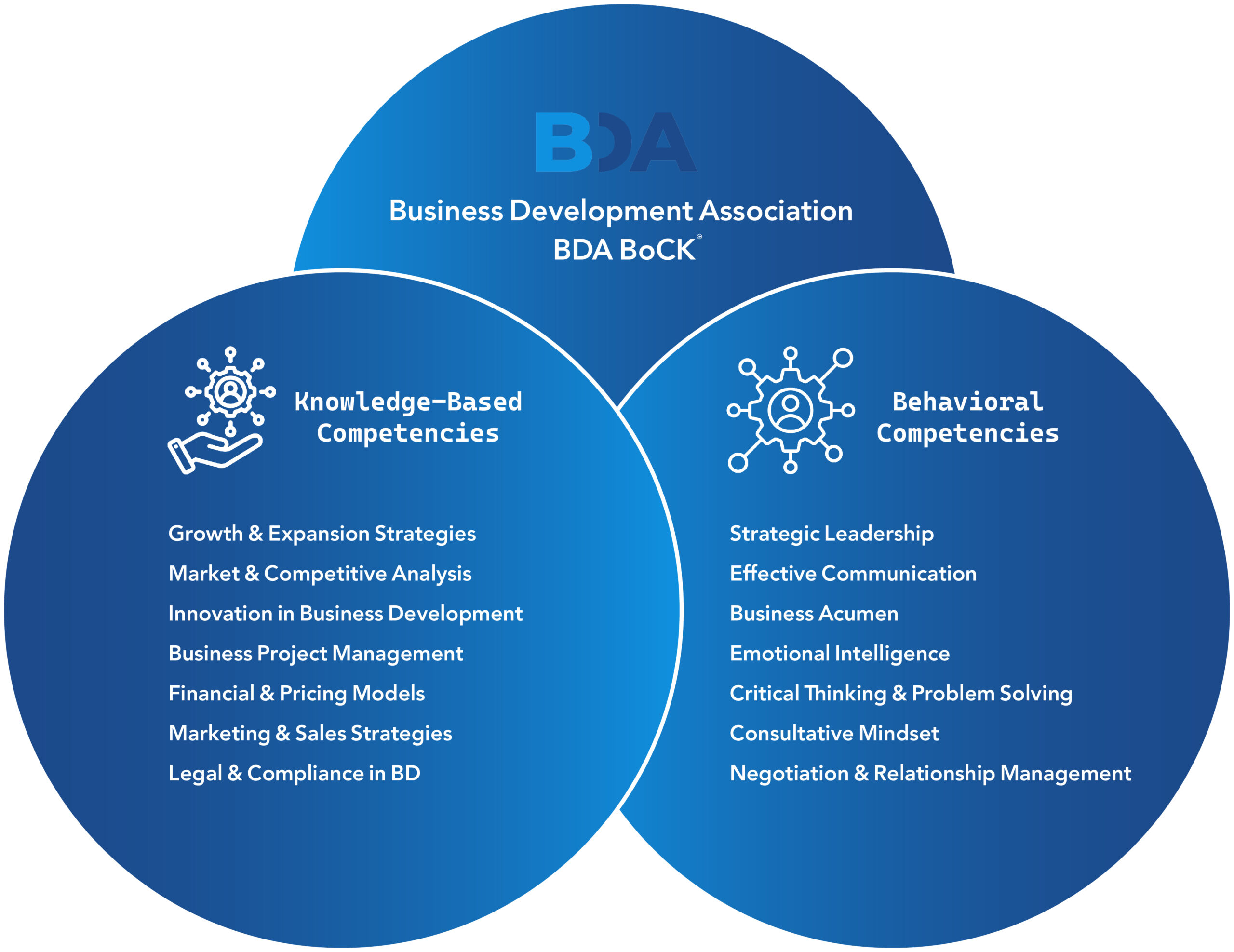
It is anchored in the BDA BoCK — the official Body of Competency & Knowledge — which outlines the required knowledge-based and behavioral skills across two pillars:
To apply for the Certified Business Development Professional (BDA-CP) Certification, you must demonstrate a foundation of academic and/or professional experience in business development or related fields. Typically, applicants fit one of the following profiles:
3+ years in a business development or growth-related role
Bachelor’s degree in business, strategy, economics, or a related field
Experience in partnerships, sales strategy, product expansion, or client engagement
Even if you’re from adjacent fields (like consulting, investment, or project management), the BDA-CP helps formalise your role as a growth architect.
3. Study the BDA Learning System & Prepare for the Standard
The BDA provides a structured BDA-CP Learning Path, including:
Once accepted, you’ll be scheduled to sit for the BDA-CP Exam, a scenario-based assessment testing your ability to apply strategic frameworks in business development contexts. The exam evaluates:
Exclusive opportunities through BDA’s partner network
Holding the Business Development Certification from BDA positions you as a certified expert in growth and strategy, boosting your reputation, employability, and consulting credentials.
Conclusion
Becoming a BDA-CP is more than a credential it’s a transformation. The BDA-CP® certification proves that you can think strategically, lead decisively, and generate value in complex business environments.
If you’re ready to elevate your business development career, start with the globally respected certification from BDA designed by professionals, for professionals.
BDA-CP stands for Development Professional Certified Business, the flagship Business Development Certification for professionals looking to build a career in strategic growth, partnerships, and innovation. It is issued by the Business Development Association (BDA) and grounded in the global BDA BoCK — a standardized competency model used to evaluate and upskill BD professionals worldwide.
Whether you’re entering the business development field or aiming to formalize your experience with a global credential, the BDA Certified Professional (BDA-CP) equips you with the skills, language, and credibility to grow faster and lead smarter.
Why Choose BDA-CP as Your Business Development Certification?
Aligned with the BDA BoCK, covering both knowledge-based and behavioral competencies.
Globally applicable, with relevance across private, public, and nonprofit sectors.
Competency-based, focusing on applied knowledge—not just theoretical.
Professional recognition, including digital credentials and registry verification.
Career enhancer—use it to move into BD roles, lead partnerships, or manage strategic growth.
The BDA Certified Professional (BDA-CP) is not just another certification it’s a global standard for what business development professionals should know, do, and lead. In a fast-changing economy where strategy, execution, and influence converge, this credential can be your strategic edge.
Introduction: Beyond Sales—BD as a Strategic Discipline
In this article, we unpack the core business development skills that define successful BD professionals, from entry-level contributors to senior transformation leaders. These skills align with the BDA BoCK, the global competency framework used across certifications like Certified Business Development Professional (BDA-CP) and BDA-SCP.
Business development is often reduced to a simple extension of sales. In reality, it is a far more complex and strategic function—one that requires an interdisciplinary skillset spanning market research, stakeholder influence, value design, and institutional transformation.
Understanding the Difference Between Competencies and Applied Skills
The Business Development Association (BDA®) distinguishes between:
official competencies defined within the BDA Body of Competency & Knowledge (BDA BoCK®) and
applied professional skills used within real-world business development environments.
The examples explored throughout this article represent practical applications and capability areas associated with modern business development practice. However, the official BDA competency framework is formally structured around the canonical competencies defined within the BDA BoCK®.
These competencies are divided into:
Behavioural Competencies
Knowledge-Based Competencies
Professionals seeking the official global framework should refer directly to the BDA BoCK® Framework.
1. Prospecting and Opportunity Mapping
Effective BD begins with the ability to identify, qualify, and prioritize high-value opportunities. This requires more than just lead lists—it demands market intelligence, value alignment, and strategic foresight.
Professionals must master tools like Ideal Customer Profiles (ICP), scoring matrices, and ecosystem mapping to ensure they are targeting prospects with both need and strategic fit. Whether entering new markets or building institutional partnerships, structured prospecting is foundational.
Modern BD requires professionals to operate as advisors—not just sellers. This means asking better questions, listening deeply, and shaping narratives that resonate with diverse stakeholders.
Whether it’s co-writing a policy proposal, negotiating a donor grant, or aligning corporate partners, BD success hinges on clarity, trust, and mutual value creation.
3. Strategic Relationship Management
Building lasting alliances demands more than good rapport—it involves mapping power structures, managing expectations, and delivering sustained value.
Tools like stakeholder maps and relationship dashboards help professionals design engagement strategies that evolve over time. From public officials to private investors, strategic relationship management is central to long-term BD success, and stands among the most critical business development skills today’s professionals must refine.
4. Financial and Strategic Evaluation
No BD initiative is sustainable without economic logic. Professionals must evaluate commercial viability, calculate ROI, and build investment cases that withstand scrutiny.
This skill becomes critical in business plans, funding proposals, and cross-sector negotiations—ensuring that BD efforts are not just creative, but credible.
5. Innovation and Co-Creation
The most transformative BD outcomes arise from innovation—not replication. Professionals must be equipped to co-design solutions, test them in the field, and iterate based on feedback.
Frameworks like the Innovation Canvas and MVP testing models help drive speed, learning, and differentiation.
6. Policy Influence and Institutional Navigation
In public and nonprofit settings, BD extends beyond markets—it involves navigating governance structures, advocating for reform, and aligning stakeholders behind shared outcomes.
BD professionals working with governments or donors must understand policy cycles, build alliances across ministries, and co-create frameworks for institutional change.
7. Execution and Adaptive Leadership
The best strategies fail without disciplined execution. BD leaders must mobilize teams, manage ambiguity, and adjust in real time.
Whether scaling a new partnership model or pivoting a market-entry strategy, adaptive leadership ensures that BD is not only designed—but delivered.
BDA-CP builds operational fluency across all foundational BD domains.
BDA-SCP equips leaders with strategic tools to drive change across sectors and geographies.
Both certifications are grounded in the BDA BoCK, ensuring alignment with global standards. These programs directly reinforce core business development skills that drive institutional growth and cross-sector impact.
Conclusion: Build BD Skills with Precision
Business development is no longer optional—it is essential. In a global economy shaped by disruption and opportunity, the institutions that thrive will be those led by professionals with structured, validated, and globally relevant business development skills.
Whether you’re designing public-private alliances, leading policy innovation, or building new market entry playbooks, your BD capabilities are a strategic asset.
Begin your certification path with Certified Business Development Professional (BDA-CP) or BDA-SCP to accelerate your impact.
Download the BDA BoCK Guide for full skill frameworks and practical tools.